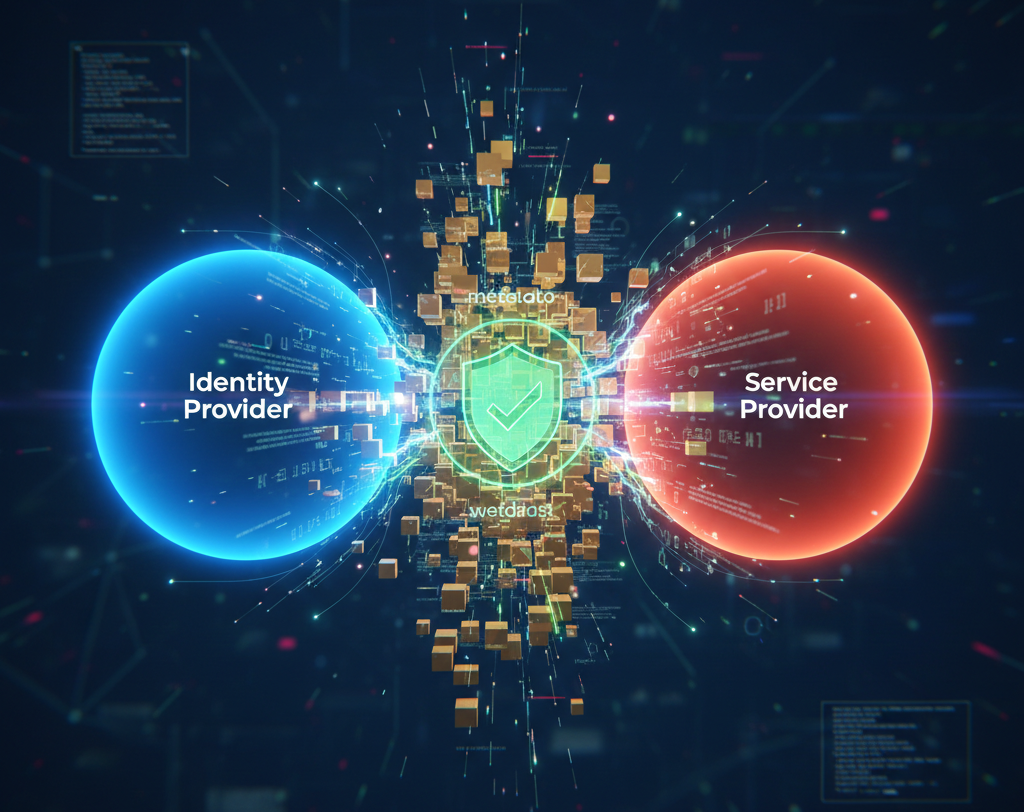
In the world of federated identity, trust is not just a feeling; it is a technical configuration. For a university student to use their home credentials to log into a global research journal or a library resource, a complex exchange of data happens in the background. This exchange relies entirely on metadata. Metadata acts as the digital passport for an application, containing the security certificates, technical endpoints, and contact information required to establish a secure link. Without proper metadata management, the seamless Single Sign-On (SSO) experience that users expect would simply collapse.
As we progress through 2026, the importance of these systems has been elevated by the UK Digital Identity and Attributes Trust Framework. This framework provides a set of standardised rules and "guard rails" that allow different organisations to trust one another’s digital identities. For Higher Education, this means that the "Trust" in our federation is now backed by national standards, making it easier and safer than ever to share attributes across institutional boundaries. However, having a framework is only half the battle; the other half is the rigorous management of the metadata that powers it.
Poor metadata management is one of the most common causes of service downtime. An expired certificate or an outdated endpoint in a metadata file can instantly lock out thousands of users. To avoid these pitfalls, institutions must move away from manual, "set and forget" configurations and toward a model of automated, verified, and continuously monitored metadata lifecycle management.
The UK Trust Framework in 2026
To understand metadata management today, we must first look at the UK Digital Identity and Attributes Trust Framework. As of 2026, the framework has reached its Gamma (0.4) release, which provides a definitive set of rules for how identity and attribute data should be shared. For institutions, this framework is the source of truth that ensures a student from one university can be trusted when they access a research tool managed by another organisation.
The Gamma update has introduced stricter requirements for orchestration service providers. It moves beyond simple login success and focuses on the integrity of the data being shared. This means that your metadata—the file that tells other systems who you are—must be more than just accurate; it must be part of a verified lifecycle.
Best Practice 1 Automate or Fail
The days of manually downloading a metadata file and uploading it to your Identity Provider are over. In 2026, the sheer volume of service providers in the UK Federation and eduGAIN makes manual management a recipe for disaster.
- Dynamic Consumption: Your IdP should be configured to pull metadata updates automatically at least once every twenty four hours.
- Metadata Query (MDQ): Instead of downloading one massive file containing every university in the world, use MDQ to fetch only the specific metadata you need for a live login. This is faster, more secure, and reduces the load on your servers.
Best Practice 2 Signature Verification
Metadata is only as good as the signature attached to it. Every time your system pulls a metadata update, it must verify the digital signature using the public key of the trust framework or federation.
- Never Disable Verification: It can be tempting to turn off signature checks during troubleshooting, but this leaves you vulnerable to man in the middle attacks where a malicious actor provides a fake metadata file to redirect your users.
- Key Rotation: Stay aware of when the federation rotates its own signing keys. In 2026, these rotations are often automated, but your system must be ready to ingest the new public key before the old one expires.
The Metadata Healthcheck Checklist
Use this list to evaluate your current setup. If you cannot tick every box, your federation trust might be at risk.
- Is your metadata refreshed automatically? (Manual updates are the leading cause of SSO downtime).
- Are you using the MDQ service? (This is the 2026 standard for efficiency and speed).
- Are you verifying digital signatures? (Essential for ensuring the data has not been tampered with).
- Do you have an alert for certificate expiry? (You should know thirty days before a metadata certificate expires).
- Is your Attribute Release Policy minimal? (Only share the attributes required for the service to function).
- Are your technical contact details up to date? (If there is a security issue, the federation needs to reach you instantly).
Key Takeaways: Trust as a Strategic Asset
Metadata management and trust frameworks are the invisible foundations of the modern university. When they work well, users enjoy a frictionless experience that spans the global research community. When they are neglected, they become a source of constant frustration and security gaps.
By aligning your institution with the UK Trust Framework Gamma standards and adopting automated metadata practices, you are doing more than just fixing a technical requirement. You are building a platform for secure, scalable collaboration that will serve your students and researchers for years to come.
At Overt Software Solutions, we specialise in the fine details of metadata orchestration. We ensure that your Shibboleth or Azure AD environment is perfectly tuned to the latest UK Federation standards, taking the complexity of trust management off your plate so you can focus on what matters most.