
The release of Shibboleth V5 represents a major step forward for institutional identity management. This version is built on a modern foundation that requires Java 17 and updated servlet containers, which naturally improves performance and security. However, simply installing the new software is only the first step. To truly protect an Identity Provider, administrators must take active steps to harden the configuration and implement the latest browser level protections.
Hardening a system involves reducing the attack surface by removing unnecessary features and tightening security controls. In the context of Shibboleth V5, this means moving away from legacy protocols and adopting stronger encryption standards. These improvements ensure that the authentication process remains resilient against modern threats such as cross site scripting and session hijacking. By focusing on both server side settings and client side headers, institutions can create a truly robust login environment.
One of the most significant areas of improvement in V5 is the expanded support for Content Security Policy. This security layer allows the server to tell the browser exactly which scripts, styles, and images are allowed to load. When configured correctly, it acts as a powerful shield against many common web vulnerabilities. As we explore the hardening process, understanding how to leverage these new features is essential for any technical team managing a university network.
Core Hardening Principles for Shibboleth V5
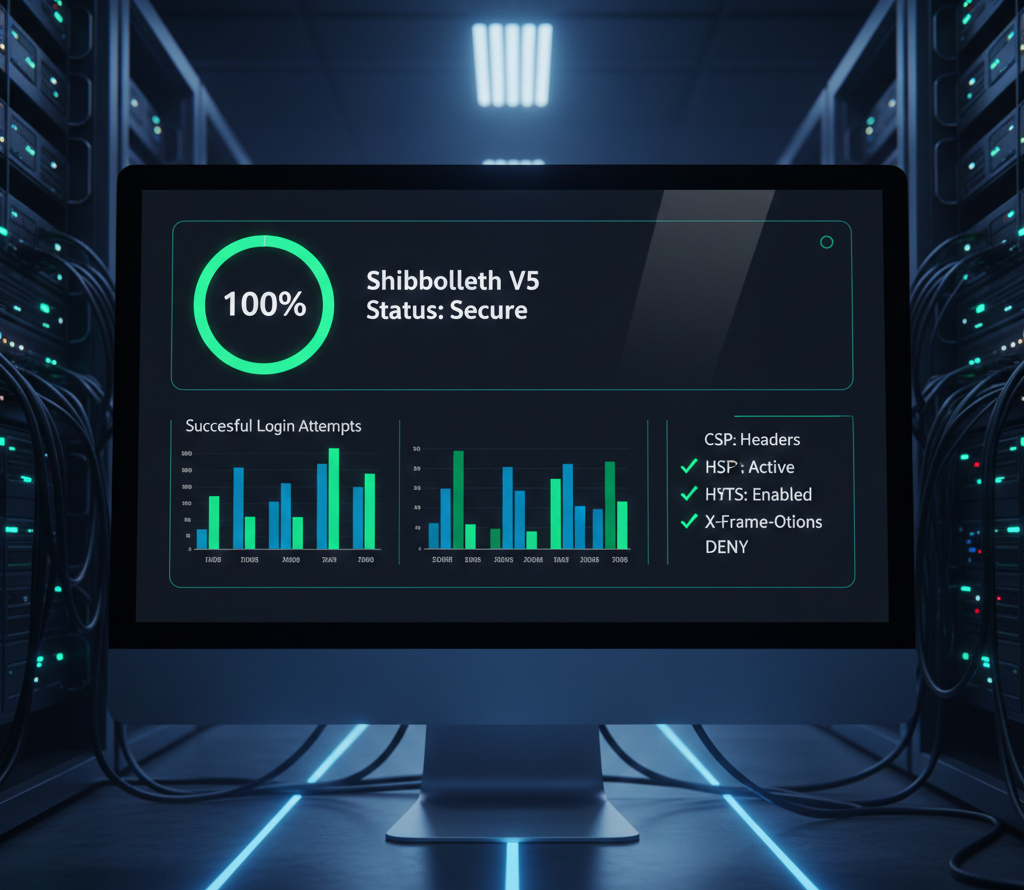
Hardening the Shibboleth V5 environment requires a focus on both the software configuration and the underlying infrastructure. A secure deployment starts with a lean installation where only the necessary modules are active.
- Legacy Protocol Removal: One of the most important steps in V5 is the removal of older, insecure configurations. Administrators should ensure that legacy features from V4 that are no longer required are completely disabled to prevent potential exploitation.
- Encryption Standards: V5 allows for the use of advanced encryption algorithms. It is highly recommended to move towards AES GCM for data encryption and SHA 256 for digital signatures. These modern standards provide better protection against decryption attempts and ensure the long term integrity of the authentication process.
- Cookie Protection: Securing the cookies issued by the Identity Provider is a vital defence against session hijacking. By setting the secure and HttpOnly flags in the idp properties file, administrators can ensure that cookies are only sent over encrypted channels and remain inaccessible to malicious scripts.
- TLS Version Control: V5 supports the latest TLS protocols. Hardening involves restricting the server to TLS 1.2 and 1.3 while disabling older versions like TLS 1.0 and 1.1, which are known to have significant vulnerabilities.
Deep Dive into Content Security Policy Configuration
The Content Security Policy is a powerful browser level security feature that is significantly enhanced in Shibboleth V5. It allows the server to define which sources of content are trusted, effectively blocking unauthorised scripts and styles from running on the login page.
In V5, the CSP is managed through the idp properties file using the idp csp property. A well configured policy can prevent various attacks, including cross site scripting and clickjacking. For many institutions, a strong starting point is to block all framing of the login page by setting the frame ancestors directive to none. This prevents attackers from embedding the university login page into a malicious site to harvest credentials.
Advanced CSP Techniques with Nonces
While a basic policy is helpful, advanced hardening involves moving away from allowing all inline scripts. Shibboleth V5 supports the use of nonces, which are unique, random numbers generated for every single request.
By adding a nonce to the CSP header and including the same value in every legitimate script tag on the page, the browser can verify that only authorised code is being executed. If an attacker attempts to inject a malicious script, it will lack the correct nonce and be blocked by the browser. This dynamic approach provides a much higher level of security than static allowlists and is a key feature of a modern, hardened Identity Provider.
Practical Steps for Better Browser Security
Beyond the CSP, there are several other headers and settings that contribute to a hardened Shibboleth V5 environment.
- HSTS Implementation: HTTP Strict Transport Security ensures that the browser always communicates with the Identity Provider over a secure connection. This prevents man in the middle attacks that attempt to downgrade the connection to unencrypted HTTP.
- X Frame Options: While the CSP provides similar protection, setting X Frame Options to DENY or SAMEORIGIN provides an additional layer of security for older browsers that may not fully support modern CSP directives.
- Referrer Policy: Controlling how much information is sent in the Referer header helps to protect user privacy and prevents sensitive internal URLs from being leaked to external sites.
By combining these browser level protections with server side hardening, universities can ensure that their Shibboleth V5 deployment is resilient against both current and emerging cyber threats.
Best Practices for Long Term Maintenance
Hardening a Shibboleth V5 environment is not a one time task but an ongoing commitment to security. As new vulnerabilities emerge and browser standards evolve, administrators must remain proactive to maintain a secure Identity Provider.
- Regular Security Audits: It is essential to routinely review the audit logs generated by Shibboleth. These logs provide valuable insights into authentication patterns and can help identify attempted credential stuffing or unauthorised access patterns.
- Subscribe to Security Advisories: Every administrator should be subscribed to the official Shibboleth Announce mailing list. This ensures that you receive immediate notification of any security patches or critical updates that affect V5.
- Staging and Testing: Never apply complex security headers or major configuration changes directly to a production server. Always use a dedicated staging environment to test Content Security Policy updates. This allows you to verify that new restrictions do not accidentally block legitimate scripts or break the user login experience.
- Patch Management: Beyond the Shibboleth software itself, keeping the underlying Java environment and servlet container updated is vital. Many modern exploits target the infrastructure rather than the application code, so a holistic approach to patching is necessary.
Key Takeaways: Building a Resilient Identity Framework
Upgrading to Shibboleth V5 offers a perfect opportunity to modernise the security posture of an organisation. By moving beyond default settings and actively hardening the configuration, institutions can protect their users from increasingly sophisticated web based attacks. The combination of server side cleanup, modern encryption, and a robust Content Security Policy creates a defensive layer that is both effective and transparent to the end user.
Overt Software Solutions has extensive experience in deploying and securing Shibboleth environments for universities and research institutions. Whether you are migrating from an older version or looking to audit your current V5 setup for security gaps, the team provides the specialised knowledge required for a successful deployment.
If you would like to learn more about our hardening services or need assistance with your Content Security Policy implementation, please contact Overt Software Solutions today.